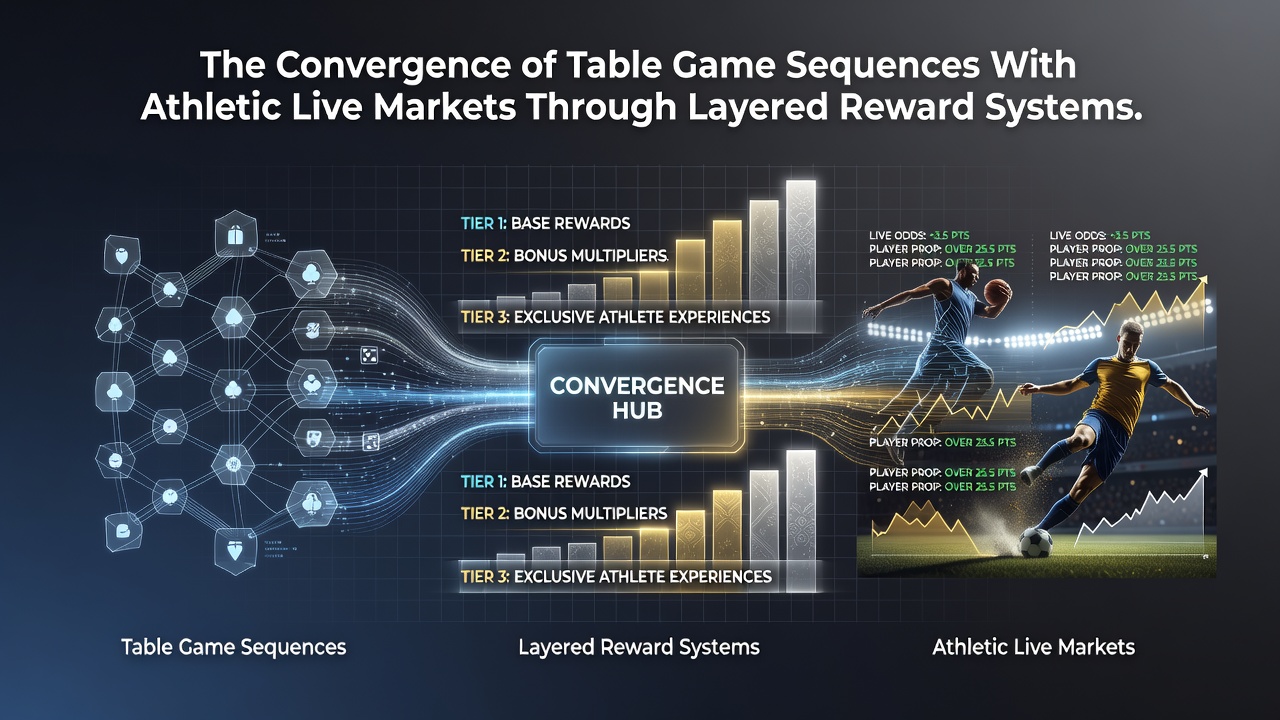
Layered Reward Structures Link Table Game Sequences to Live Athletic Markets
Table game sequences such as progressive blackjack hands and roulette outcome chains now intersect with live athletic markets through structured reward layers that accumulate across both verticals, and operators track these interactions via unified player accounts that assign points based on combined activity rather than isolated sessions. Data from multiple jurisdictions shows increased integration of these systems during 2025 and into August 2026 as platforms expand cross-category tracking tools.
Mechanics of Sequence Integration
Table game sequences generate data points like consecutive wins or specific card combinations that feed into broader reward algorithms, while live athletic markets contribute real-time variables such as in-play odds shifts and event milestones, and layered systems convert both streams into tiered credits that unlock bonuses or enhanced odds. Observers note that this fusion allows players to progress through levels by mixing activities instead of focusing on one category, with algorithms adjusting reward rates according to volume and variety.
Studies from research institutions indicate that platforms employing these models record higher session lengths when users engage across table sequences and athletic wagers in the same account, since points earned from one area accelerate progress in the other. For instance, a sequence of three blackjacks might contribute equivalent value to a live tennis set completion, creating parallel pathways that maintain engagement without requiring separate loyalty programs.
Market Data and Platform Adoption
Figures from the European Gaming and Betting Association reveal steady growth in hybrid reward adoption across member operators through mid-2026, with layered systems appearing in both mobile and desktop environments. These structures often incorporate dynamic multipliers that scale with participation frequency, and reports show users who activate cross-vertical tracking complete more table rounds alongside athletic bets than those limited to single-category incentives.
One documented case involves platforms that tie athletic live market exits to table game entry points, where a completed sports wager triggers a temporary sequence bonus on roulette or poker variants. Researchers at academic centers tracking gambling patterns have documented similar mechanics in North American markets, where state-level data collection highlights comparable integration rates in regulated environments.

Technical Implementation Patterns
Backend systems synchronize sequence tracking with live market feeds through API connections that update player ledgers in real time, and this setup supports reward layers that reset or escalate based on daily or weekly thresholds. Experts observe that operators prioritize seamless transitions between table interfaces and athletic dashboards so that accumulated credits remain visible regardless of which activity a user selects next.
Payment flows tied to these rewards often route through digital wallets that credit bonuses instantly upon milestone achievement, while regulatory frameworks in regions such as Australia require clear disclosure of how sequence and market data combine to determine reward eligibility. As of August 2026, several major operators report expanded testing of these combined systems following updates to their compliance protocols.
Player Behavior and Cross-Category Trends
Those who study user patterns find that layered rewards encourage shifts between table sequences and athletic markets within single sessions, with data logs showing increased movement from one to the other when point multipliers apply across both. Industry reports compiled by trade groups document examples where players completing table progressions receive athletic wager credits that activate during live events, creating continuous loops of activity.
Geographic comparisons indicate variations in implementation speed, with some markets favoring sports-dominant layering while others emphasize table sequence foundations. Academic analyses of transaction volumes suggest that unified reward layers reduce fragmentation across verticals without altering core game mechanics or market odds structures.
Conclusion
Layered reward systems continue to connect table game sequences with athletic live markets through shared tracking mechanisms that convert diverse activities into unified progress metrics. Available data through August 2026 demonstrates consistent platform adoption across multiple regions, supported by technical integrations and regulatory oversight that maintain separation between game outcomes and incentive calculations. European Gaming and Betting Association reports alongside findings from university research centers provide the primary sources for these observed trends in cross-category reward design.